High on Life 2
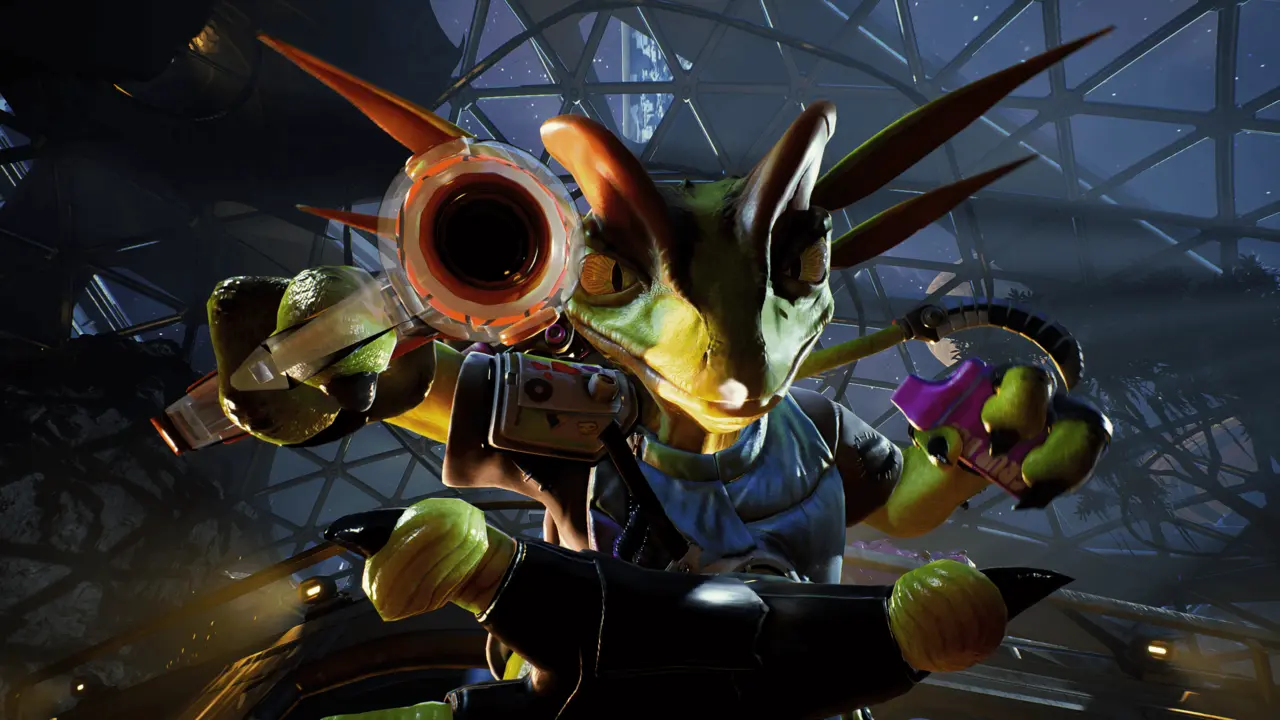
High on Life 2
Gameplay Duration: 13.7 hours (main story only, no completionist runs, normal difficulty)
Impressions
High on Life is... fun.
And the second chapter is no exception. While that might sound like I'm reducing it to a mere caricature or implying something negative, I actually don't think it's that trivial. The series' debut in 2022 introduced a fairly simple sci-fi universe built around a distinctive brand of sarcasm and irreverence—one you either hated on principle or found genuinely enjoyable. In this second installment, the irony is back and perhaps even dialed up a notch: a choice I personally appreciated and didn't find overly grating (or, as the kids say these days, pure "fanservice").
Since I promised myself not to take an overly journalistic or authoritative tone (neither of which is really my wheelhouse anyway), I don't think I'll drag this review out too long. Not out of spite, but because the experience of this run was exactly that: simple, direct, unpretentious, and highly enjoyable. I'd almost call it a great companion piece.
We are not talking about a masterpiece in any regard, and I consider that a fundamentally positive thing. Lately, it feels like there are only two valid reactions: screaming "masterpiece" or total disappointment. Sitting right in the middle feels to me like that "sympathy C+" your high school teacher gave you out of sheer respect, rather than the "sportsmanlike B" you needed to graduate just because "deep down, you're a good kid."
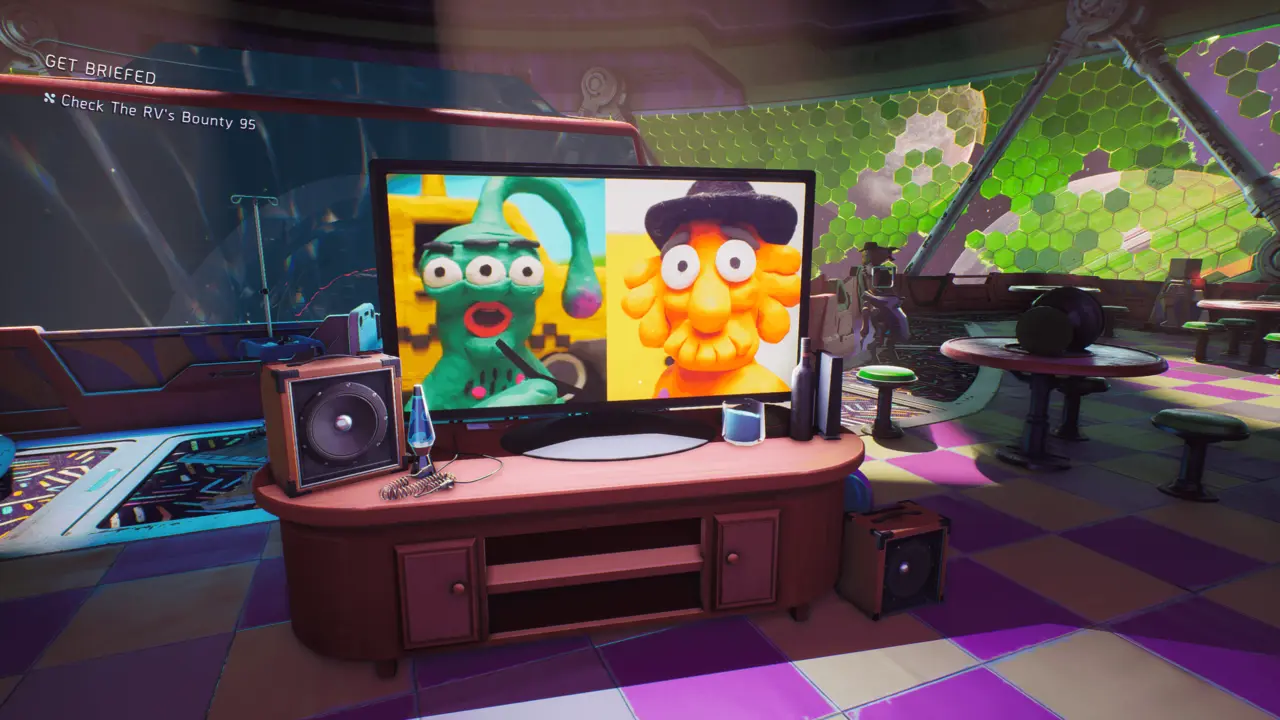
Touching briefly on the visuals: besides the explosive mix of colors (and, mild spoiler, different 3D styles and retro-gaming graphics) that clearly hint at some heavy-duty recreational chemistry, the textures sometimes boast excellent overall rendering. At other times, they give off a "plasticky" vibe that makes you want to take a bite out of a random alien passerby.
In my experience, there were a few annoying bugs—nothing game-breaking, usually fixed by just reloading the last checkpoint. Rushing toward the next objective, for example, I sometimes broke event triggers, making progression impossible; other times, falling off a platform respawned me out of bounds instead of where I slipped. For the record, I know the internet has been vocal about more severe technical issues, including stuttering and Unreal Engine 5 bottlenecks (which even required dedicated patches), but personally, stability and framerate didn't give me any major headaches during my run.
Beyond being a first-person action shooter, I think this game heavily nods to the boomer-shooter genre: the combat is extremely fast-paced, backed by an equally frenetic soundtrack. The sheer space and mechanics at your disposal to tackle bosses or basic waves of enemies turn the whole thing into an adrenaline rush rather than a grueling test of skill.
Gameplay and Gunplay
While it doesn't pretend to be an open world, the game runs on fairly tight rails but offers slightly larger, more layered hubs than its predecessor.
You'll tackle a series of story-driven main missions, only able to deviate from the beaten path between one assignment and the next. During these exploration phases, you can comb through unlocked areas for collectibles, credit chests, or cosmetics. However, many hidden spots require specific gear to access. Enter one of the game's best new additions: the skateboard. This mechanic doesn't just speed up traversal; it completely redesigns your approach to platforming and grants fresh, hilarious mobility even mid-firefight, making backtracking far less of a chore.
During my playthrough, I stuck mostly to the main questline, taking short detours just to line my pockets—which was more than enough to keep my gear properly upgraded.
The combat system remains simple and chaotic. Alongside your starter kit, you'll "meet" new guns to add to your arsenal. Without calling it a revolutionary leap, the dev team definitely put effort into adding bizarre dynamics: for instance, you'll find yourself dual-wielding a pair of "married" pistols. Every firearm retains its own unique ability (tied to a cooldown) and an alt-fire, cementing the game's commitment to never taking itself seriously.
This chapter also dials up the dialogue verbosity—not to add literary depth, mind you, but to exaggerate the sheer stupidity of the supporting cast. There's even a setting to tone down your weapons' chatter because, yes, they never shut up. But you'll see them do things you'd never expect, and they never failed to get a laugh out of me.
Story
For those who missed the first game: don't worry, High on Life 2 is perfectly enjoyable without prior knowledge, as it does a solid job summarizing and contextualizing past events.
At the start of the game, we relive our rise to glory: we are the famous crew that dismantled the dreaded G3 cartel, nailing every mission and wallowing in luxury as top-tier bounty hunters. Everything seems idyllic until, during a routine hunt, we stumble upon a target that completely flips the script, turning us into the galaxy's most wanted fugitives.
Amidst family drama and trigger-happy (and loud-mouthed) weapons, we discover that a far more grotesque and treacherous enemy is pulling the strings behind our downfall. Without giving too much away, suffice it to say we'll have to deal with a corporation willing to do anything to launch its new antidepressant... quite literally harvested from human beings. It's a ruthless piece of anti-capitalist satire that blends perfectly with the rampant idiocy of the game's universe, once again calling us to either save (or permanently ruin) the fate of the human race.
Reception
Stepping out of my personal bubble for a moment to take a cold, hard look at the general consensus, the average sentiment around High on Life 2 aligns perfectly with that "sitting right in the middle" vibe I mentioned earlier.
Most opinions agree that the game successfully preserves the anarchic energy and batshit-crazy humor of the first chapter, easily brushing aside any doubts about its writing. The bizarre characters and absurd boss battles are almost universally praised as the true engine that keeps you playing with a smile on your face.
However, it's not without its sour notes, which mostly hit the gameplay and technical sides. Many complain that the shooting, while fast, remains a bit too clunky and simplistic. Despite the wacky ideas, the gunplay doesn't seem to have made that much-anticipated leap forward, struggling to compete with tighter, more polished shooters in the genre. Even the highly praised skateboard is somewhat divisive: while incredibly useful for exploration, a chunk of the player base feels it makes combat arenas a bit too chaotic, distracting from the actual gunfights.
Finally, the elephant in the room: optimization. While I was largely spared during my run, the launch was perceived by many as a bit too "rough," plagued by performance drops and crashes that required swift post-launch patching to smooth things out.
In short, the average verdict paints it as a wonderfully flawed diamond: a sequel that sometimes overreaches and stumbles over old mistakes, but remains hugely entertaining if you're willing to embrace its pure, chaotic madness.