Arise: a simple story
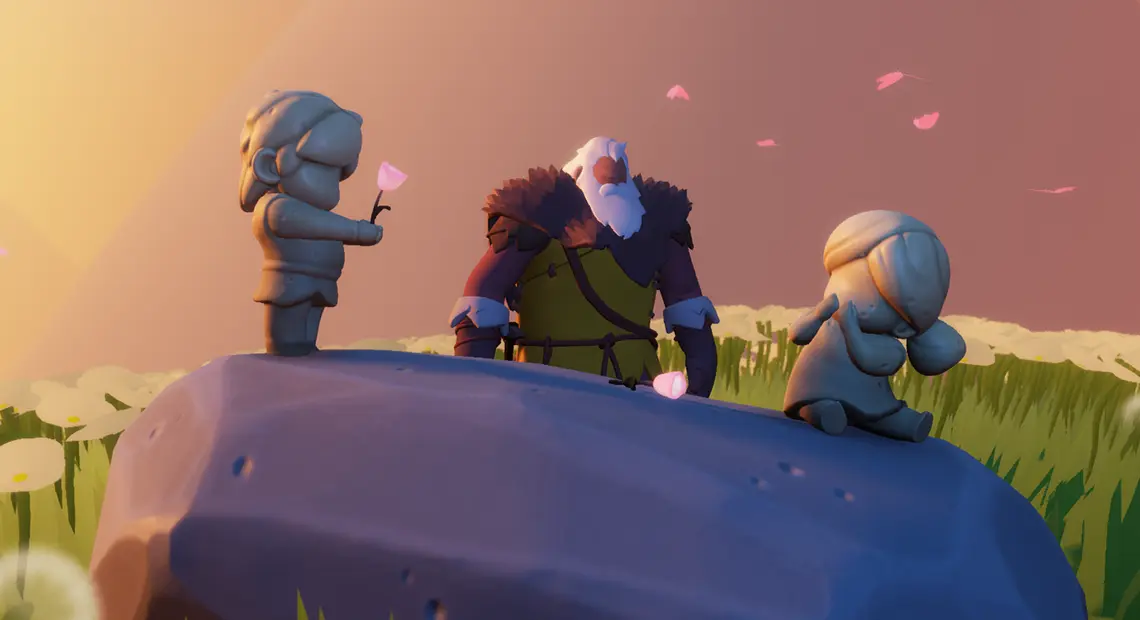
Arise, a simple story
Developer / Publisher: Piccolo Studio / Techland Publishing Genre: Puzzle Platformer / Narrative Adventure Gameplay duration: 4.4 hours (not 100%, main campaign only)
"Every new beginning comes from the end of something else: Arise, a simple story, tells us about what could be a part of each of our lives and reminds us that we all have a history, sometimes difficult to retrace."
Impressions
Personally, I have a problem with what have recently been defined as "cozy games": they are undoubtedly very relaxing, as the label suggests, but they always end up touching some emotional chords that turn that "chill" moment into a not-always-welcome introspection. One way or another, they bring out all that empathy I don't always want to feel (and, in the worst cases, a few tears).
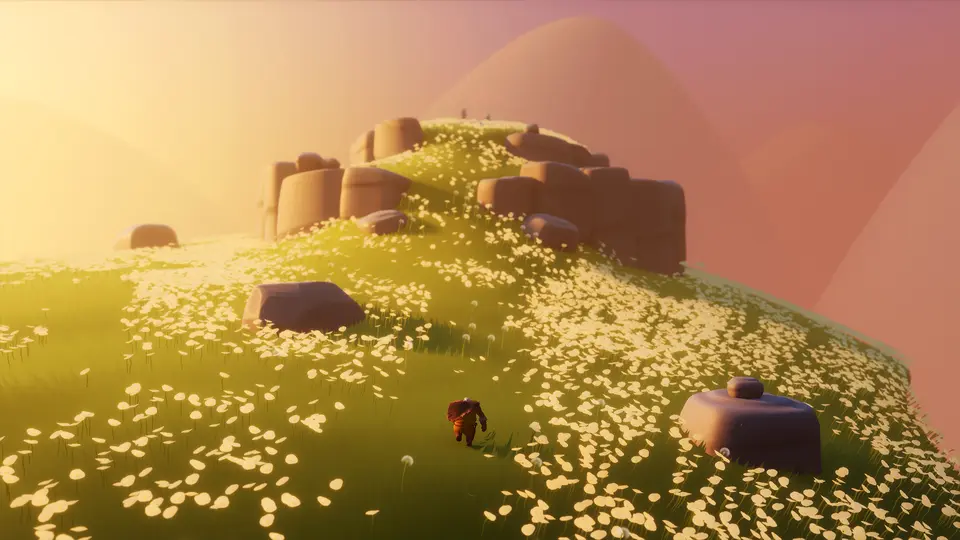
Arise, a simple story, is a game I discovered by chance, in one of the many sales that periodically offer slightly older titles at ridiculously low prices. I didn't miss the chance to buy it blindly, since, at the end of the day, I have a soft spot for tears.
I didn't actually want to put it in these perhaps overly exaggerated terms, but clarifying these aspects right away will surely help you understand if it's the kind of title for you or not. After all, the fact that the game is simple is already suggested by its title: what we immediately face is an artistically satisfying world, outlined by an unpretentious 3D and rendered by an Unreal Engine 4 that, except for a few particular effects or transitions, doesn't have to strain itself to amaze us with cutting-edge technologies. What Arise aims for is the first impact, the visual flair, which in my opinion already sets the right mood and makes things clear: there will be no action, only progress; and a narrative that doesn't speak, but retraces a lived experience.
It's almost useless to specify, but obviously, accompanying our adventure is a soundtrack that is deliberately touching when needed, triumphant in the right moments, and barely perceptible when a sudden mood change is required. In short, this game does exactly what it promises in the title: it tells a simple, unpretentious story.
Gameplay
The few mechanics provided by this game rely heavily on platforming. Since the storytelling is linear and does not include branching paths of any kind, the only recurring dynamic in the game is figuring out how to overcome an obstacle, reach a new area, or avoid a danger.
Besides the basic actions that pretty much any platformer offers (jumping, climbing, using a grappling hook), we will have an additional and fascinating ability: controlling time. This skill directly affects the surrounding environment. If a platform is too high to reach, advancing the seasons will grow a snowdrift that we can use to get to the top, or perhaps alter the water level to help us proceed.
The entire adventure takes place on two different "layers": a macro-area that will mark our progress (acting as a hub) and the actual individual levels. As we progress through the game, we will unlock new zones that are added to the main path. Each area is confined to a strictly linear track that we must follow to complete it; however, by exploring deeper, we can occasionally find collectibles. While not essential for a complete understanding of the context and the story, they add plot elements that enrich the overall experience.
There is also a local co-op mode, designed to share the journey by separately managing the character and the temporal powers.
Story
We don't have high-sounding protagonist names, nor heroes with a dark past or an epic battle to face; here the battle is solely internal, just like the journey the character we guide will undertake. I'm deliberately staying vague because, also given the shortness of the title, you will be able to get an idea and contextualize everything from the very first minutes. It's worth experiencing this journey without having too much prior information.
Essentially, it's a story told backwards: sometimes, retracing one's steps is not necessarily a way to make amends, but simply a means to find inner peace, defeating the demons of one's past.
The Journey's Highs and Lows
Despite the strong emotional impact and the praiseworthy art direction, the experience is not without structural stumbles. The very nature of the platforming, in fact, sometimes feels a bit clunky; having to repeat imprecise jumps during moments of high emotional tension abruptly breaks the narrative pace, watering down the immersion. Added to this is a certain degree of disconnect between aesthetics and playability: although the graphics and soundtrack are excellent, the mix of image, dramatic tone, basic gameplay, and narrative doesn't always integrate perfectly, resulting in a feeling of a conceptual "mish-mash." Time manipulation, while initially very original, ends up relying on puzzles that soon become predictable, failing to add sufficient variety to the formula. Partly due to a very short overall duration (between 4 and 6 hours), the story sometimes feels a bit too "simple" and less explored than the premise seemed to suggest. Finally, for those wishing to tackle the adventure in company, it should be noted that the cooperative mode feels poorly balanced, with the real risk that the second player might end up feeling marginalized compared to the main exploration dynamics.